Building Ultimate Digital Guitar Pedalboard
Every guitarist chases that tone. But for me, it wasn't just about sound — it was about control, flexibility, and expression. I wanted a live-ready, software-powered pedalboard that merged pro-grade virtual effects with tactile control via both feet and fingers.
That's how I ended up creating a compact, all-in-one Digital Soundboard Pedal Rig, built around REAPER, TouchOSC, ReaLearn, and a few clever tweaks.
Why Build a Custom Guitar Rig?
Traditional pedalboards are limited by physical space and fixed signal chains. My digital solution offers unlimited routing options, preset recall, and the ability to control every parameter from either a foot controller or touchscreen interface. There are a lot of adventages to this approach:
- Unlimited virtual pedal combinations
- Complete recall of all settings
- Dual control via foot and touchscreen
- Compact, portable hardware setup
Step-by-Step Build Process
○ Core Components
The backbone of this build includes REAPER DAW as the host, ReaLearn for MIDI/OSC mapping, TouchOSC for the touch interface, and a MIDI footswitch called MIDI Captain for hands-free control. The virtual amp and effects come from Neural DSP's Archetype: Plini and Valhalla DSP plugins.
○ Hardware Setup and Specifications
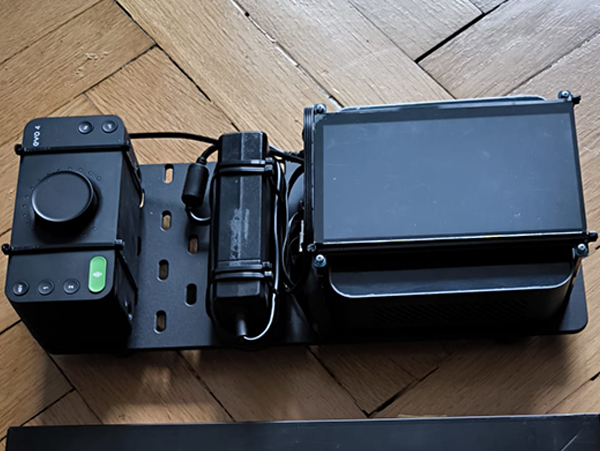
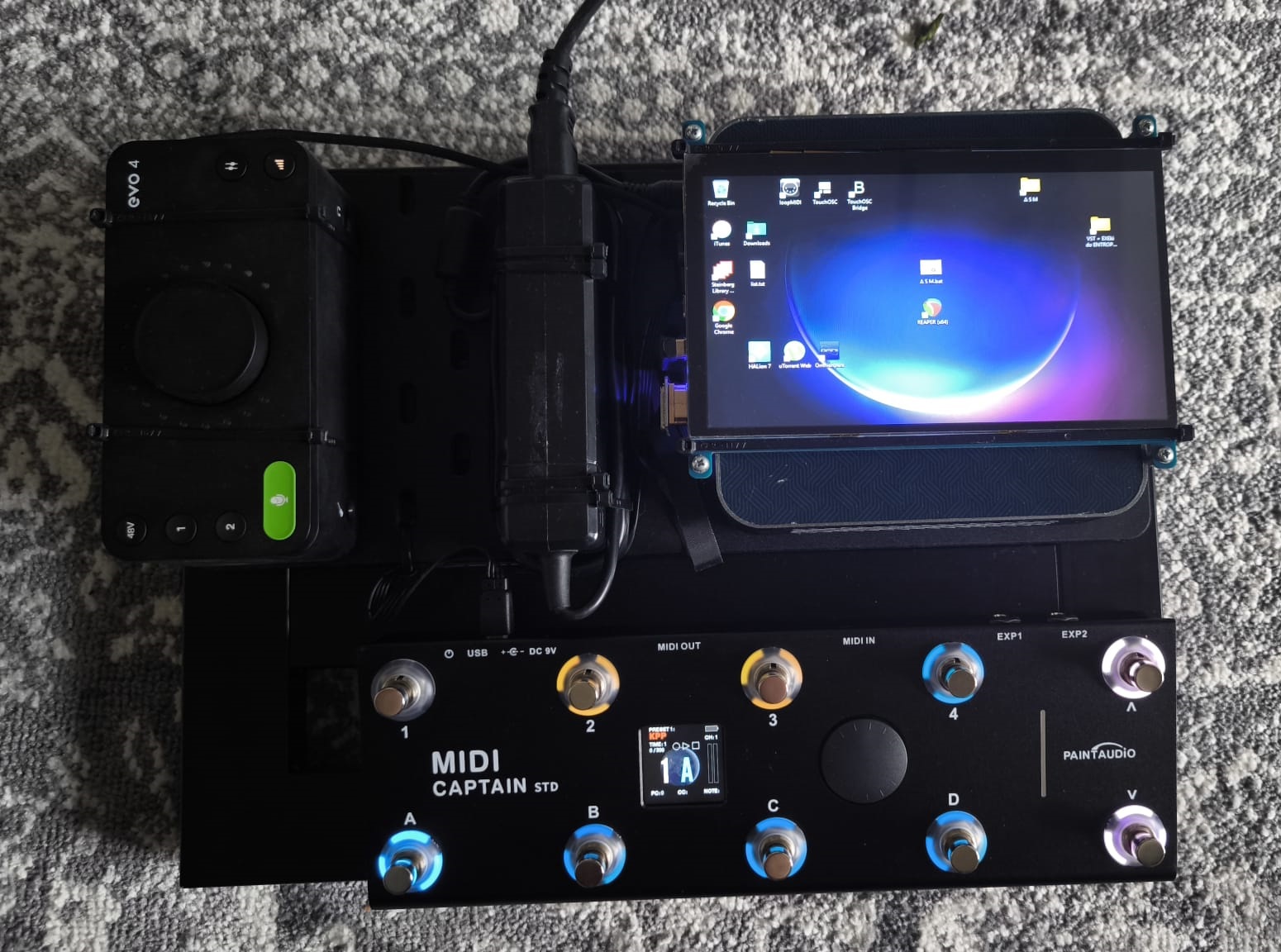
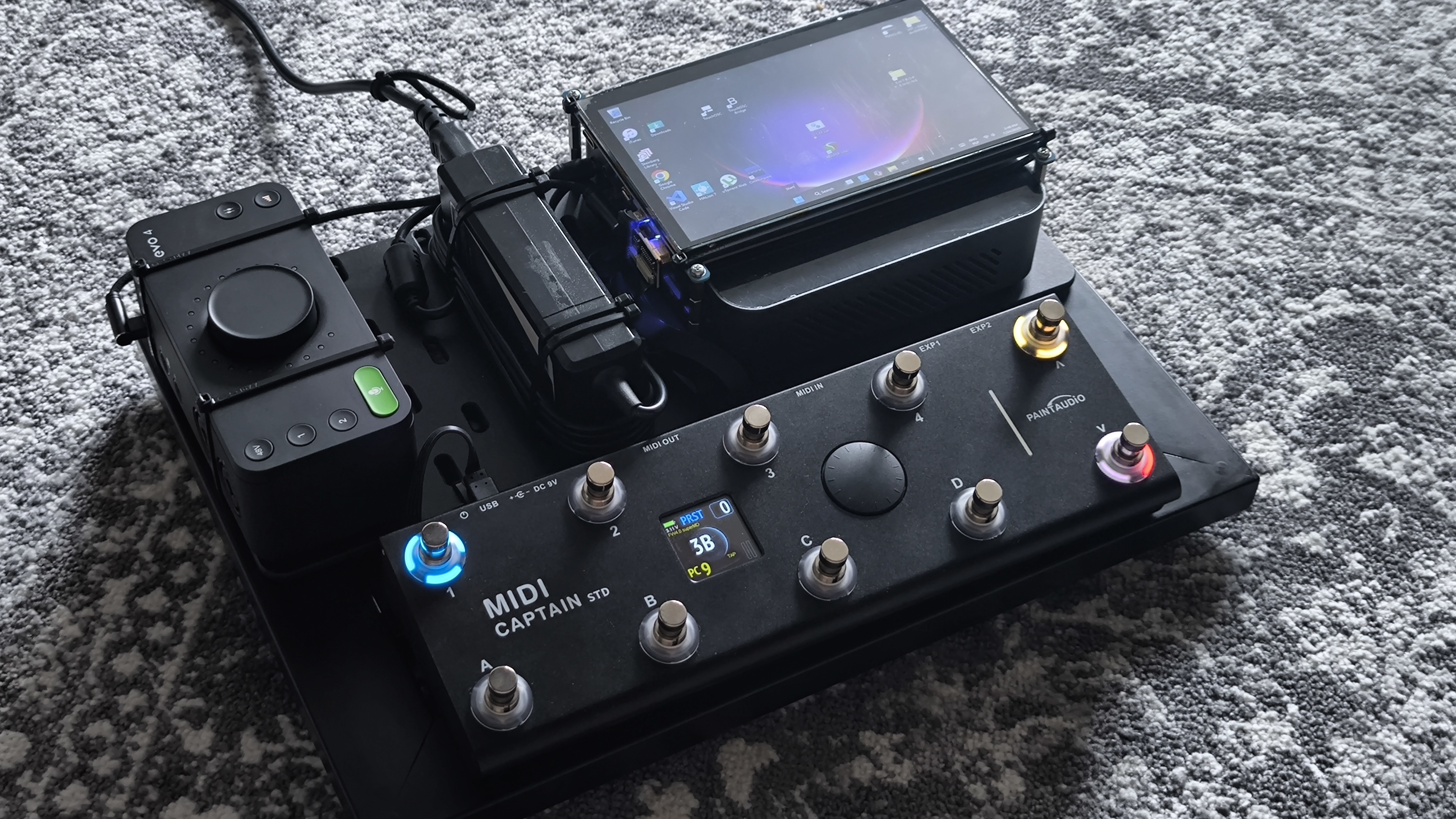
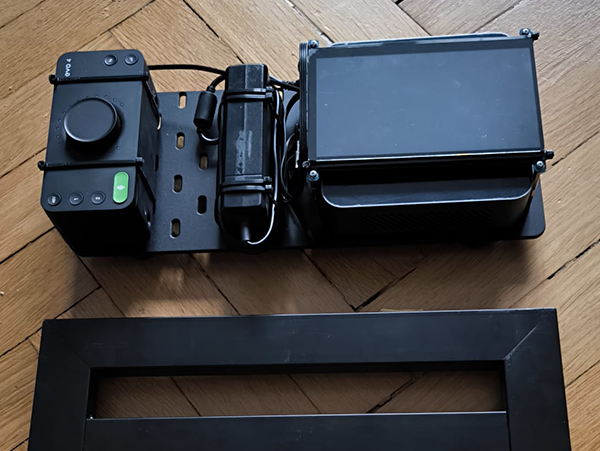
I used a compact Windows 11 mini PC with a touchscreen display as the brain of the operation. Guitar goes straight into the low-latency Audient EVO4 usb interface, and the MIDI Captain controller connects via USB B calbe. Everything is powered up by a laptop charger with just one 230V wire.
- Topton Mini PC AMD Ryzen 5 5600H
- 7,5" Touchscreen Display
- Audient EVO 4
- PAINTAUDIO MIDI Captain STD
○ Software Configuration
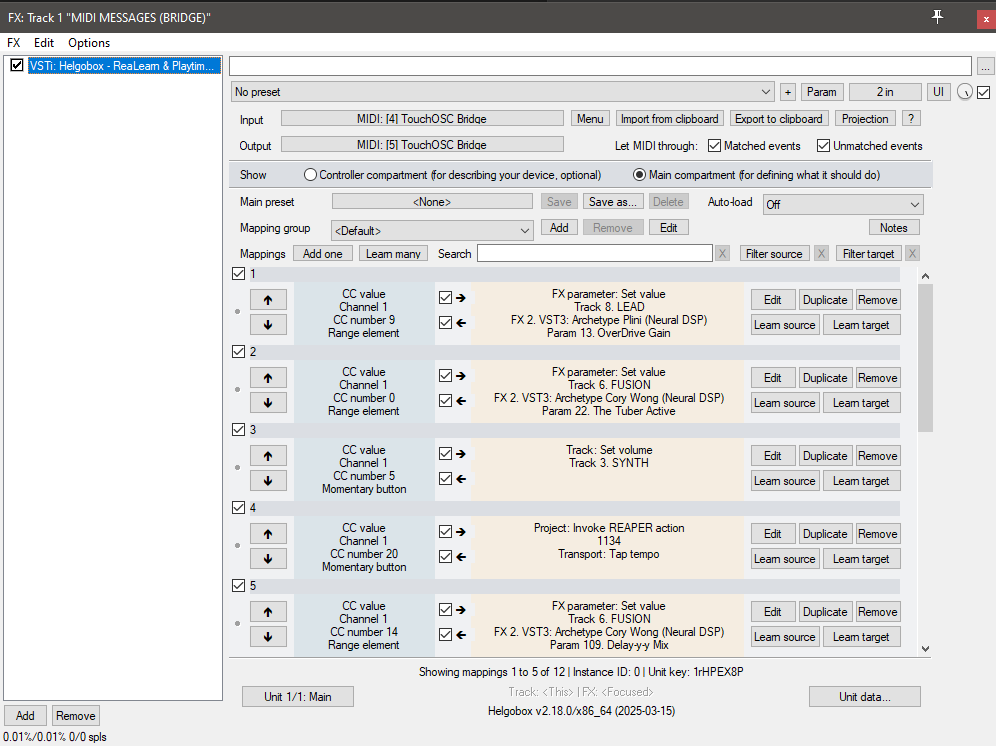
REAPER serves as the central hub, with ReaLearn handling all MIDI and OSC mappings. I designed a custom TouchOSC interface with sliders for real-time effect control and buttons for preset switching.
- Reaper
- TouchOSC
- Neural Amp Modeller
- Stock and Free VST plugins
- Custom REAPER script for restoring plugin parameters
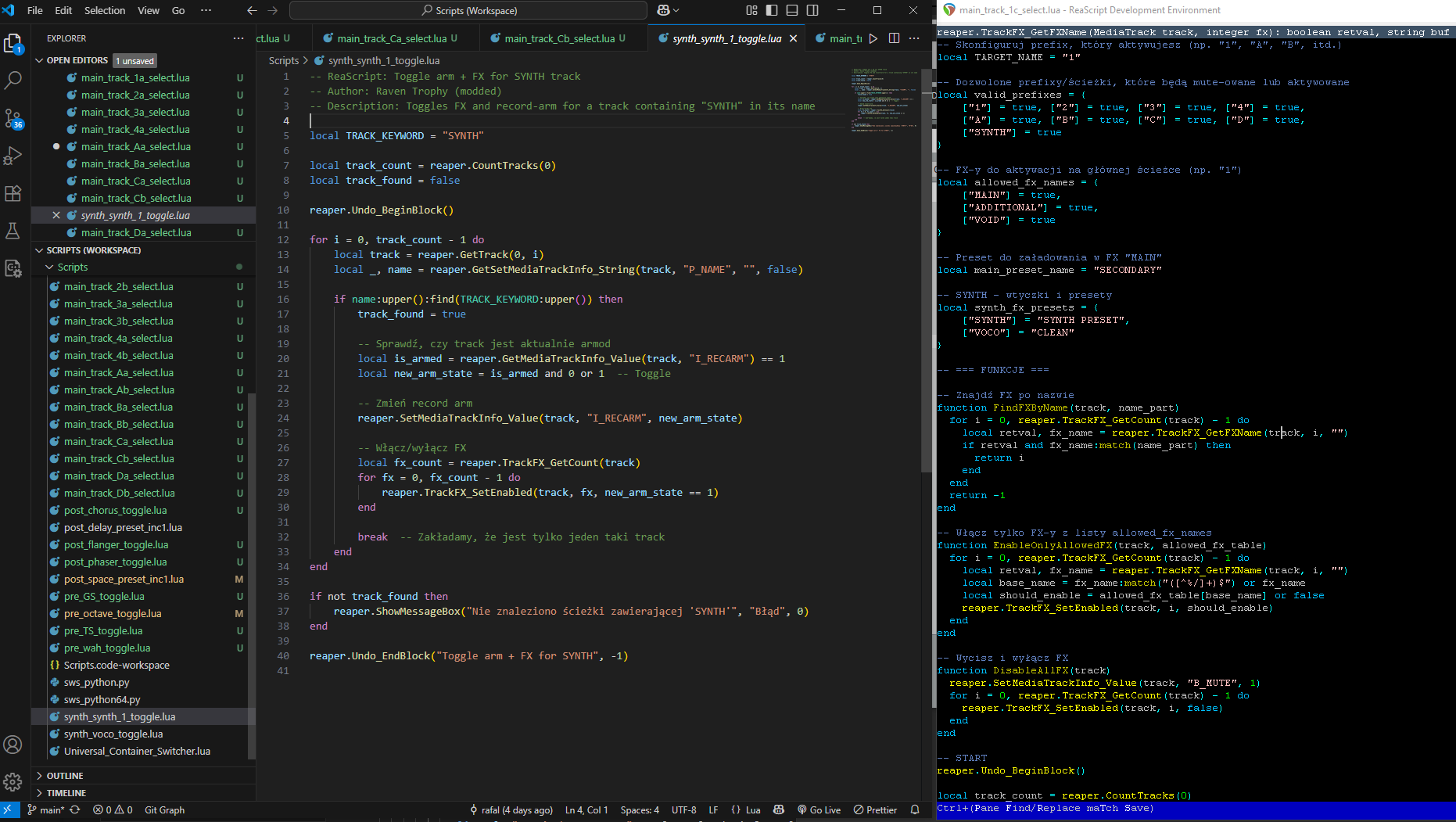
I’ve created a Lua script in REAPER that loads a saved snapshot of plugin parameters (like Neural DSP settings) from a JSON file. This allows me to reset effects to a known state at the beginning of each song. The script integrates seamlessly with actions triggered by MIDI or TouchOSC.
○ FX Routing
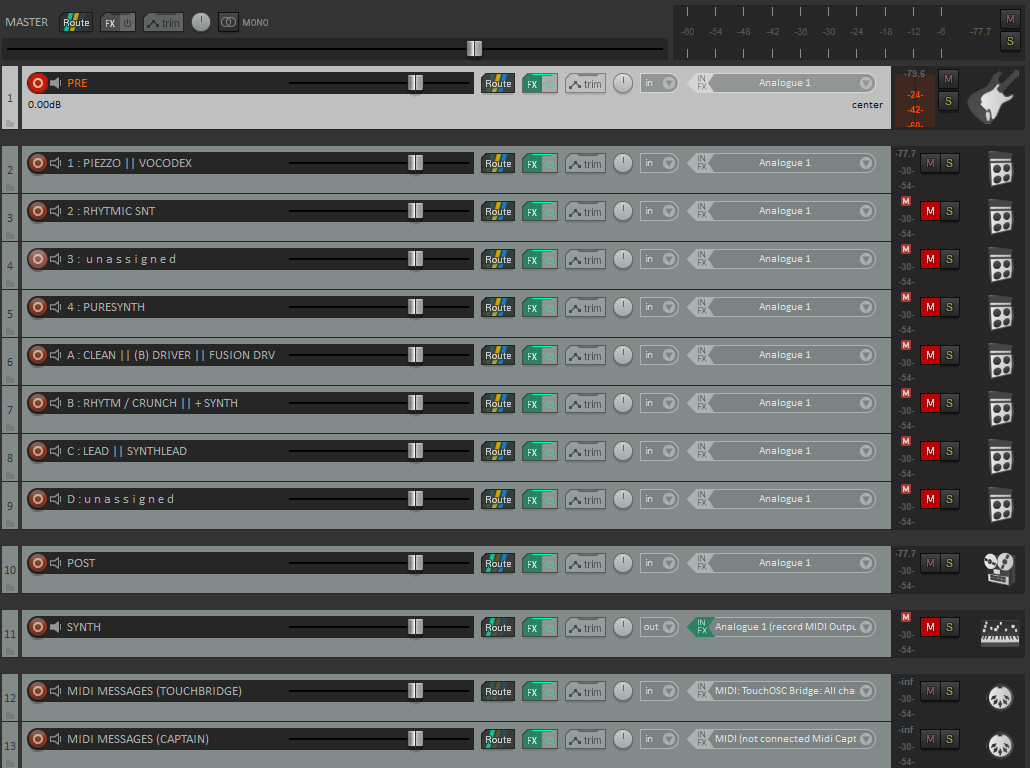
The signal chain runs through multiple tracks in REAPER, each dedicated to specific effects. This allows for parallel processing and complex routing that would be impossible with physical pedals.
For Archetype Plini, I’ve created a bypass control for the built-in cabinet block using its parameter Active Cab. This lets me route signals through external IR loaders or real amps via FX Loop with full toggle control.
Advanced Features
The system includes several pro-level features that make it performance-ready:
- Live preset switching with seamless transitions
- TouchOSC scenes for different performance needs
- Local OSC loopback for reliable wireless control
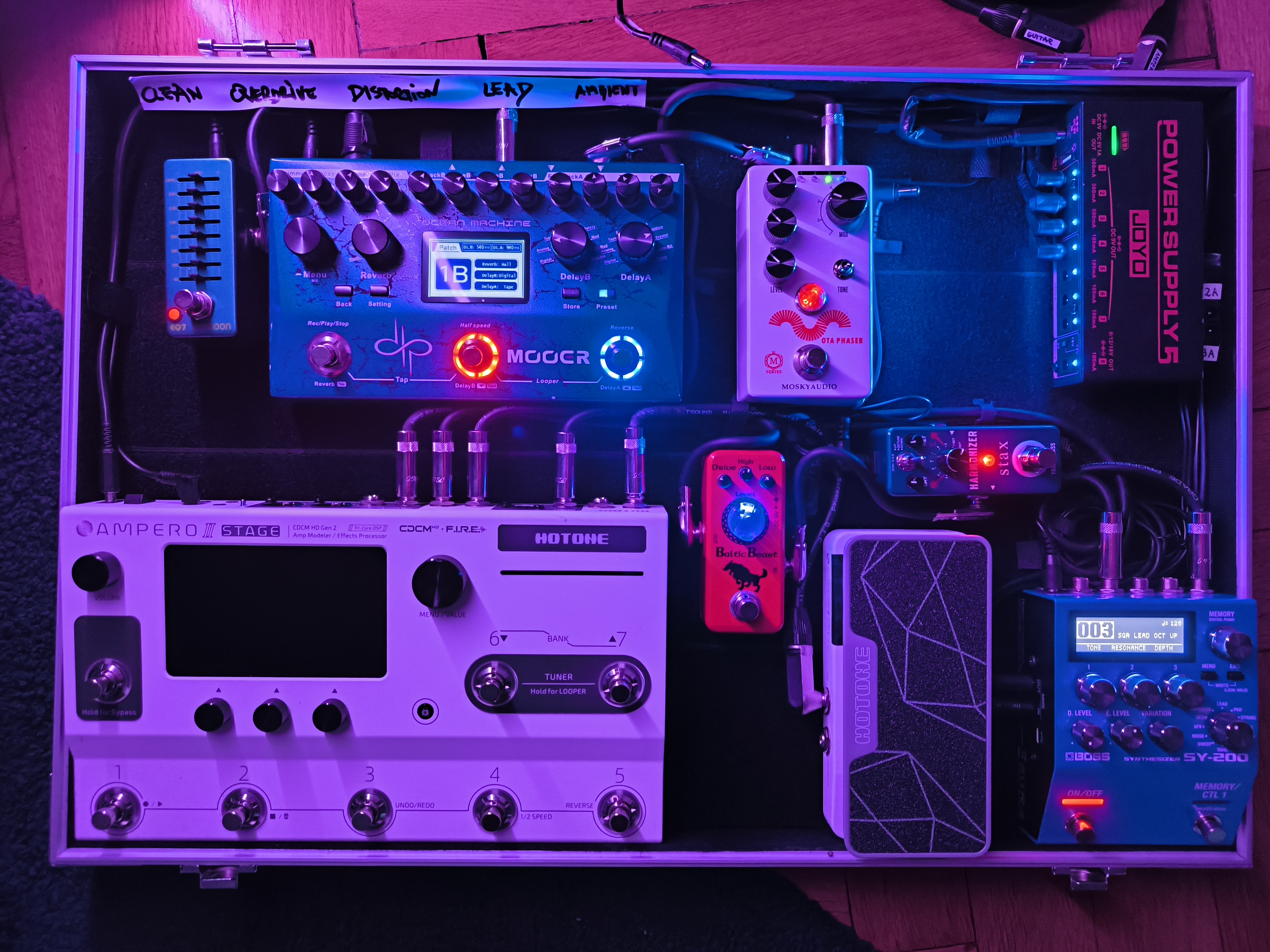
- FX loop integration with my Hotone Ampero Stage II
Looper MIDI – One-Button Configuration
Instead of relying on a full looper plugin, I configured a looper in REAPER using native actions and custom ReaLearn bindings with a one-button MIDI setup using MIDI Captain.
- Short press: Start/stop recording
- Double tap: Clear loop
- Long press (hold 1.5s): Overdub toggle
This is implemented via REAPER actions like "Transport: Record", "Track: Remove items", and "Toggle record overdub" combined with MIDI Captain’s long press and double-tap message routing. Thanks to ReaLearn’s conditional mapping system, this setup is minimal and expressive — no screen needed.
Final Results
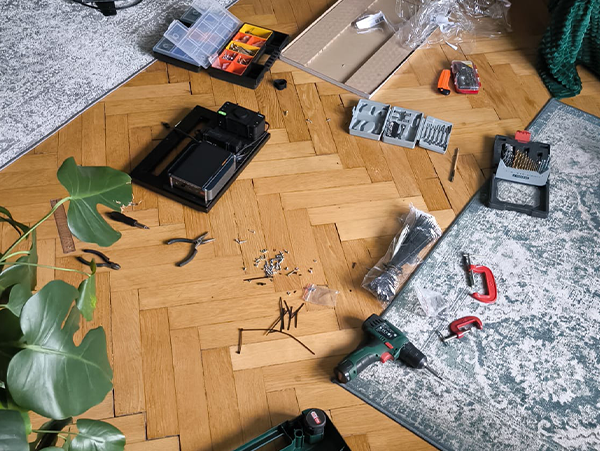
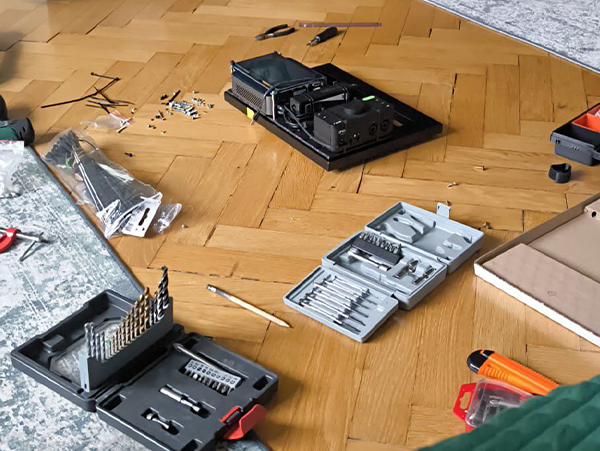
The completed rig delivers professional-grade tone with unprecedented flexibility. It fits in a small backpack yet offers more control than a traditional pedalboard three times its size. What's really nice about this unit is the fact that it can be detached from the alluminium pedaltrain and can be placed as two separate componencts in some safer spots on the stage: the brain - PC and auudio interface can be placed on the amp or in the rack whilst the heart - footswitch controller can send the signals directly from the main stage.
Future Improvements
I'm currently working on adding song-specific preset management and a web-based remote control interface. The modular nature of the system makes it easy to expand and improve over time.
This project proves that with the right software and creative thinking, you can build a guitar rig that surpasses traditional hardware limitations while remaining intuitive to play.