Hybrid Hybrid Pedalboard 1.0
Future Improvements
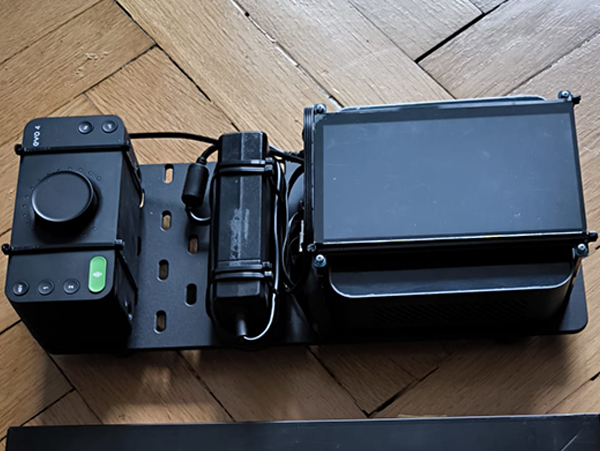
I'm going to start this post a bit perversely, because I'm going to talk about what I'm currently working on, rather than what the post is supposed to be about. After parting ways with the monster pedalboard, I'm currently prototyping a new compact setup based on a Windows mini PC. It's designed to be lighter, more powerful, and far more practical for real-world gigging.
This new direction is all about minimizing hassle and maximizing flexibility. I'm rebuilding the rig around REAPER, TouchOSC, and MIDI footswitches — but more on that later.
Every guitarist chases that tone. But for me, the journey started with something much more hands-on — a physically massive pedalboard packed with analog and digital gear, wired and programmed down to the last detail.
That pedalboard was an absolute beast. It took months to plan, wire, configure, and fine-tune. But in the end, it became too much — too heavy, too complex — and I eventually sold the entire rig. Here’s the story.
Why Build a Custom Guitar Rig?
I wanted a setup that could handle ambient pads, synth layers, crushing metal tones, harmonized leads, and even experimental textures. Commercial multi-FX units never offered the routing and control I needed. So I built my own hybrid rig — an ambitious mix of digital brains, analog power, and deep MIDI integration.
- MIDI-controlled signal chain switching
- Layered time-based effects with spillover
- Hardware synth integration via Boss SY-200
- Analog EQ and drive pedals for tone shaping
Step-by-Step Build Process
○ Core Components
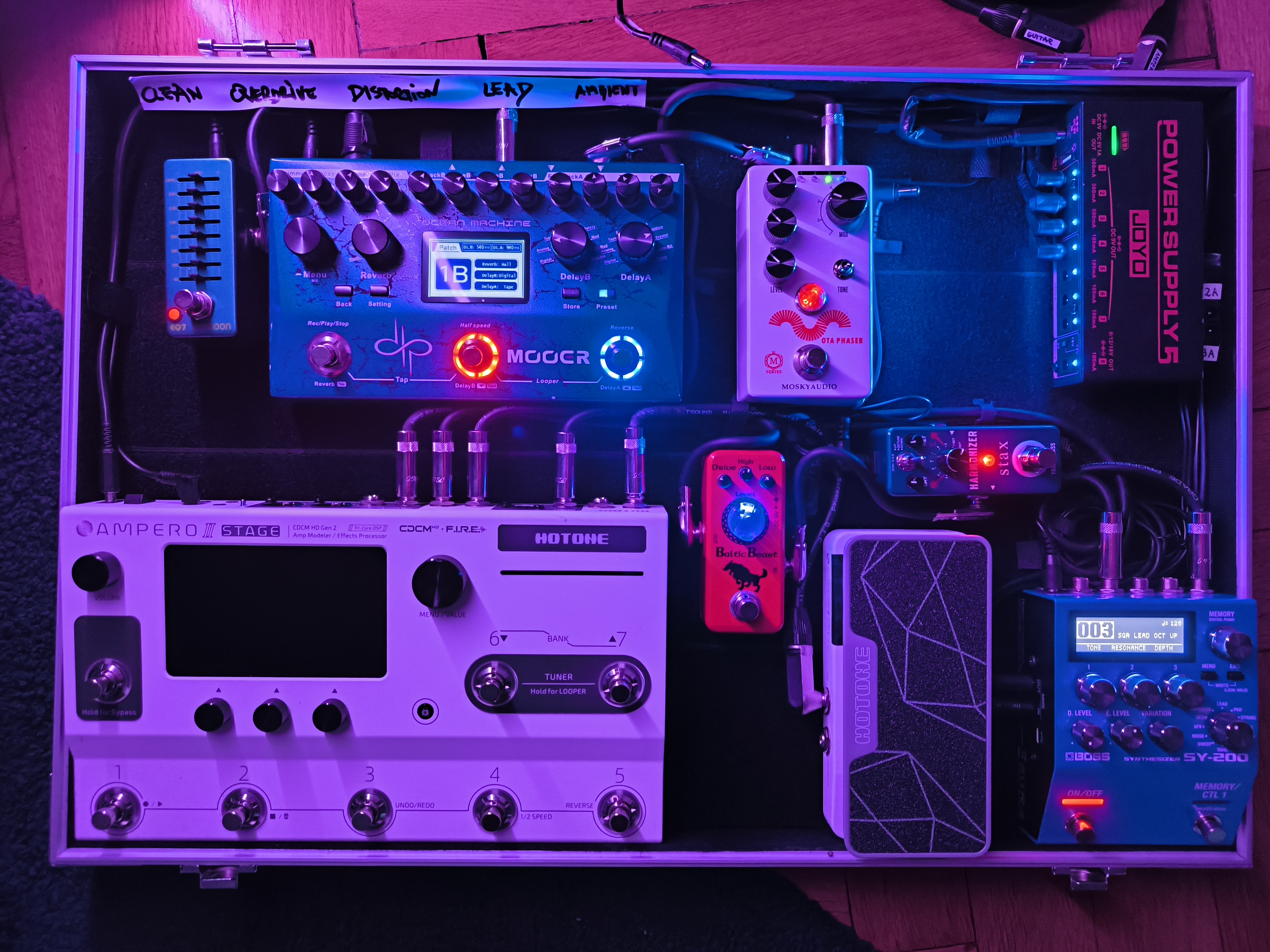
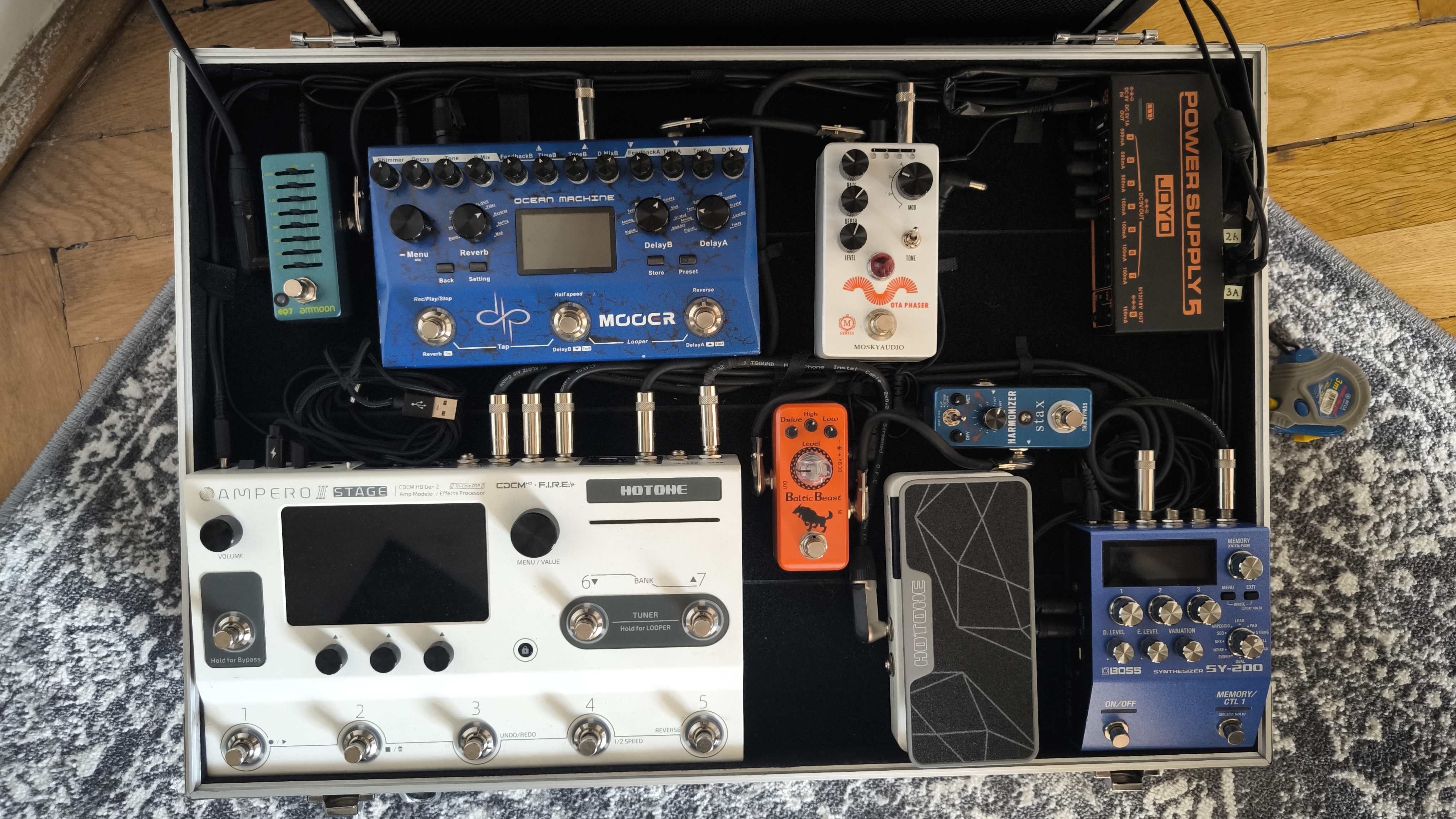
At the heart of the system was the Hotone Ampero Stage II — a powerful amp modeler, effects unit, and MIDI controller in one. It served as both my front-end tone engine and the control center, sending MIDI PC and CC messages to coordinate changes across other devices.
- MOOER Ocean Machine – for dual delays and reverb textures
- Stax Harmonizer – intelligent pitch-shifting for solos and ambient layers
- Boss SY-200 – polyphonic synth generator
○ Hardware Setup and Specifications
The board also included analog support: the Ibanez Mini Metal brought gritty, high-gain tones to life, while the Ammoon EQ7 allowed precise EQ shaping. The Mosky OTA Phase provided warm, analog-style modulation for clean and ambient sections.
All units were hardwired into a custom pedalboard case. I soldered each cable myself to fit exact lengths. The board featured internal routing for power, MIDI, and audio — all powered by a rock-solid JOYO Power Supply with isolated outputs.
- Custom TRS and MIDI cables (DIN/3.5mm adapters)
- Velcro-mounted dual-tier layout with hidden cable paths
- Patchbay for fast I/O access on stage
- Footswitch-based preset control via Ampero MIDI out
○ Software Configuration
I used the Ampero’s MIDI implementation chart to program preset-based changes. Each patch switch sent commands to the Ocean Machine, SY-200, and Harmonizer, aligning delays, synth patches, and harmonies seamlessly with my performance. It took weeks of mapping and testing to get everything stable and gig-ready.
○ FX Routing
Signal routing was semi-modular: distortion and harmonizer (octaver) came first, followed by Ampero’s amp modeling and cab IRs. Then the chain split (as a FX loop) to Boss SY-200 (for synth layers). This gave me parallel processing and tight control over wet/dry blends.Eventually all the signal was passed the last chain of the unit: OTA Phaser, MOOER Ocean Machine and then the EQ as a boost for solo purposes.
Advanced Features
Despite being hardware-based, the pedalboard featured many “smart” functions that rival modern software rigs:
- Global MIDI synchronization for all time-based effects
- Real-time patch switching with no audio dropouts
- Layered synth tones with live harmonization
- Optimized analog-digital hybrid signal routing
Final Results
When it was finally finished, the pedalboard delivered everything I dreamed of — stunning tone, precise control, and massive sonic versatility. But at a cost. The full case weighed a ton, took up half a car trunk, and required constant tweaking between rehearsals.
I realized I had crossed the line from musician to technician. Eventually, I sold the entire setup — not because it didn’t work, but because it worked *too well*. It had become a full-time job to maintain.
Now, I’m shifting toward a leaner, smarter solution. My next build will be based on a mini PC running REAPER, with MIDI footswitches, virtual amps, and flexible FX routing. No more hauling a suitcase of pedals — just a guitar, a backpack and unlimited creative possibilities.